
지속가능 항공 연료 기술 선두 기업들, 신규 가공 시설로 비상하다
전 세계 운송 수요에 연료를 공급하고 인구를 먹여 살릴 방법을 찾는 지속가능성 과제 속에서, 친환경적으로 하늘을 나는 방법을 찾는 것은 근본적인 도전 과제입니다. 현재 수요는 증가하고 있지만, 지속가능 항공 연료(SAF)의 공급량은 전 세계 항공기를 띄우기에는 여전히 새 발의 피 수준입니다. 게다가 이 연료의 생산은 식품 공급망에서 사용될 수 있는 원료를 사용하기 때문에 식량 공급에 영향을 미칠 수 있습니다. 하지만 Moeve(구 Cepsa)와 Apical Group 산하 Bio-Oils Energy의 합작 투자사인 Cepsa Bioenergia San Roque(CBSR)가 식량 공급에 영향을 주지 않으면서도 SAF 공급을 확대하려 하고 있습니다. 스페인에서 진행 중인 12억 유로 규모의 이 프로젝트는 Alfa Laval의 기술 지원을 받고 있습니다.
날짜 2026-08-24
Alfa Laval has won the contract to supply its innovative pre-treatment equipment that will be key to producing hundreds of thousands of tonnes of SAF every year at a new plant currently under construction in Huelva.
Executive Director of Apical, Pratheepan Karunagaran, says: “Our 2G biofuels plant with Moeve, which will be the largest aviation fuel processing facility in southern Europe, is an excellent example of how industry players can come together to unlock the potential of SAF and scale up adoption in an affordable manner.”
Maarten Wetselaar, Moeve CEO, highlighted: “Today we are breaking ground on our second-generation biofuels plant, the first major milestone of our Positive Motion strategy. This strategic project for Spain and Andalusia will make us a European benchmark in the field of green molecules and facilitate the immediate decarbonization of sectors that cannot run on electrons, like aviation.”
This is the start of a new chapter for Moeve and this region that will generate quality employment and a new era of industrialization.
Maarten Wetselaar, Moeve CEO
Alfa Laval is supplying two different pre-treatment units for the plant, which is an important step on the journey towards decarbonizing the global transport sector in a sustainable manner, while creating more than 2,000 direct and indirect jobs in the process.
“It means a lot to have this degree of trust placed in Alfa Laval, delivering key solutions that will be the foundations of a project that has seen huge investment,” says Bent Sarup, Vice president, Oils & Fats Systems BU Food Systems. “It’s a very significant order for us and reinforces our reputation as real leaders and experts in this vitally important area.”
The new plant in Palos de la Frontera, will produce 500,000 tonnes of SAF and renewable diesel annually from advanced feedstock – which comes from fats and oils waste. This is important in terms of sustainability as these are products that do not impact on the global food supply, which means that the rising demand for biofuel can be met without hampering the efforts to feed our populations.
Alfa Laval’s pre-treatment units will operate on two separate lines with similar capacities at CBSR, one which processes multiple advanced feedstocks and one that focuses on used cooking oils and palm waste oils.
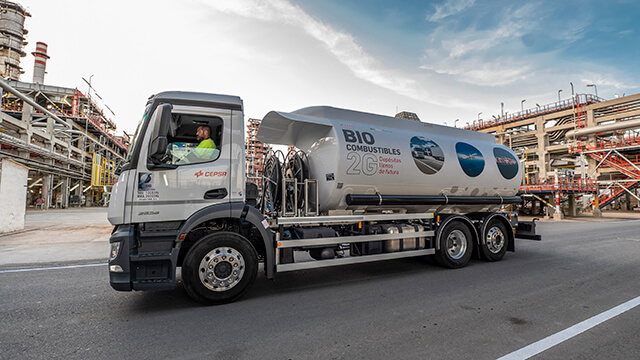
This allows for flexibility and future-proofing, as Andrew Logan, Regional Business Manager – Europe, Oils & Fats Systems, explains: “The two systems make for a flexible overall solution as it can deal with complex or simplified pre-treatment, depending on the feedstock involved. Looking into the future, no one knows what feedstock will be available, so building in flexibility like this is absolutely key.”
The new plant means that overall Moeve and Bio-Oils Energy will be doubling their total renewable fuels production capacity at the facility to one million tonnes a year. The global production of SAF is expected to reach 1.5 million tonnes in 2024 and according to the International Energy Agency (IEA), the use of advanced feedstock in producing this fuel must increase to 40% by 2030 – up from 9% in 2021 – to help meet this demand while minimizing impacts on the global food supply and land-use.
The IEA’s Net Zero Scenario also states that over 10% of fuel consumption in aviation needs to be SAF by 2030 to stay on course for net zero CO2 emissions by 2050. In 2022, the International Air Transport Association estimated global SAF production to make up only around 0.1% to 0.15% of total jet fuel demand.
As well as supplying this crucial much-needed biofuel, the new facility will also emit 75% less CO2 than a traditional biofuel plant and is designed to achieve net zero emissions in the medium term using 100% renewable electricity and various heat recovery and energy-efficiency systems. It will only use reclaimed water, and its water emissions will have a minimal impact on the ecosystem thanks to a powerful water treatment plant.